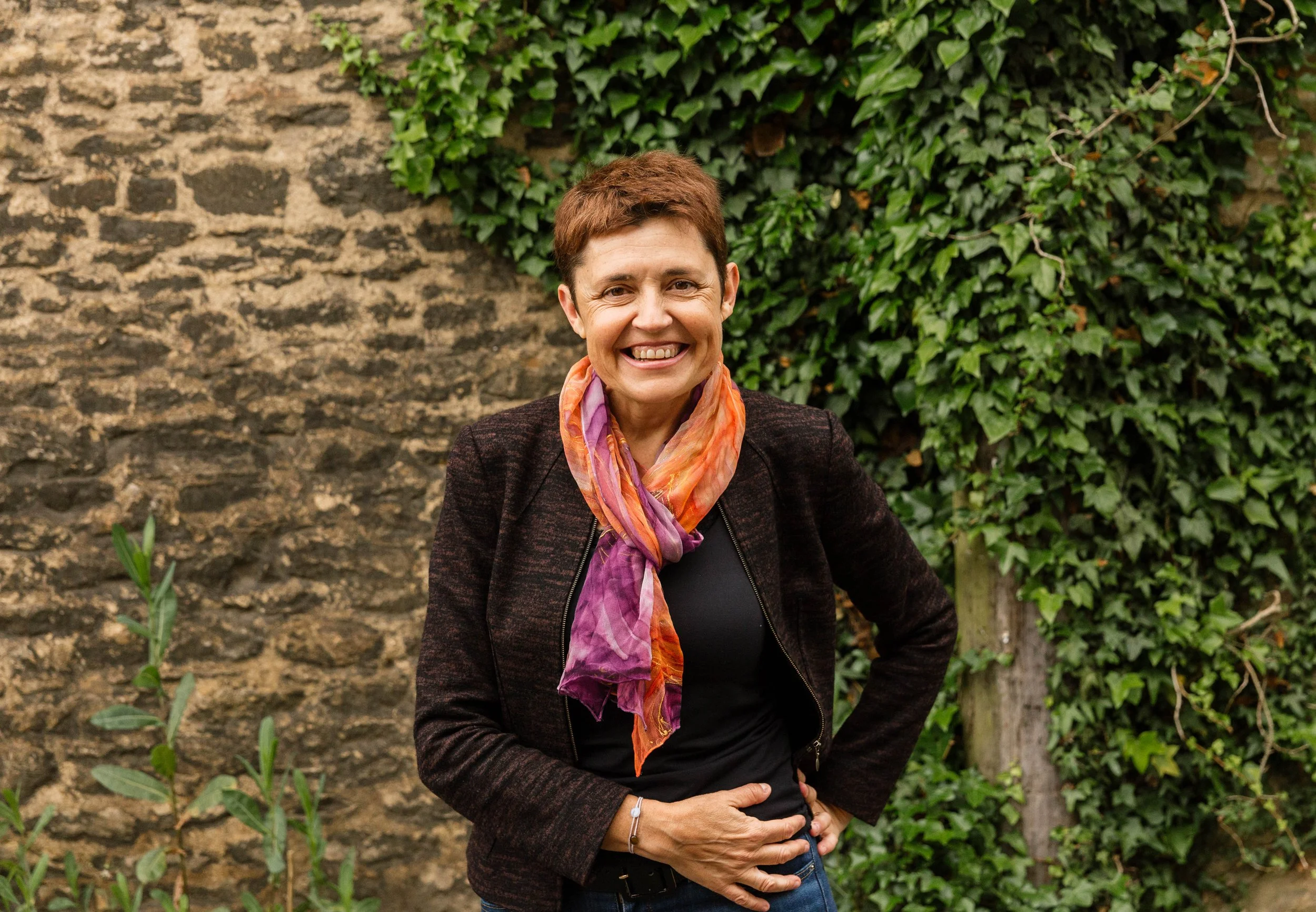
Rosa Arias-Yague & Silvia Sanchez-Arias
It’s Not Them. It’s All of Us.
25 November, International Day for the Elimination of Violence against Women: Because the Problem Is Not Someone Else's, and Neither Is the Solution
Article initially published at Visionarias Business in Spanish
Most of us, if asked, would say with absolute conviction that we are against violence against women.
Yet, a woman tells us that someone has abused her, and it turns out that we know the abuser. He is our friend, our colleague, our brother. We have never noticed anything unusual about him. In fact, we think he is a nice guy and, deep down, or perhaps not so deep down, we believe he would never do something like that.
What do we do?
Violence against women is not committed by monsters.
It is committed by ordinary people we see every day, who, more often than not, know their victims. They are partners, relatives, friends and acquaintances, and they can also commit extremely serious acts of violence against women (Women's Aid, 2026; Sexviol, 2022). This is one of the first obstacles to recognising, preventing and eradicating sexual violence.
Are we willing to listen to a victim when doing so threatens our image of someone we care about, our sense of belonging to a group or the reputation of an organisation we are part of?
If we are convinced that a perpetrator must look like a monster, when the person involved is someone we know, we may react by defending our image of them. This can lead to disbelief, minimisation, victim-blaming or pressure to remain silent. Here lies one of the most uncomfortable contradictions: we may consider ourselves feminists and yet respond in ways that silence a victim.
The problem is complex, but that complexity cannot absolve us of responsibility.
“Violence against women is a structural problem, with multiple intersecting dimensions that affect different women in different ways. If we want to eradicate it, we need profound change, prevention and accountability from institutions and society as a whole. Yet recognising that the problem is structural does not mean that there is nothing we can do.”
Daring to question our own innocence.
Our responses can help challenge abuse or contribute to normalising it, justifying it and even silencing those who disclose it. Yet these responses do not occur in isolation. They are influenced by the beliefs and attitudes we tolerate, which sustain what we know as "rape culture" (Rape Crisis; Observatorio Violencia Sexual).
We also need to challenge the harmful ideas that underpin it. One of these is the idea of men as protectors.
When we talk about violence against women, we often hear responses such as, "If someone did that to my daughter, I'd kill him."
But what does that threat change?
We need to question a form of masculinity that responds to violence with more violence, while so often remaining silent in the face of controlling behaviour, humiliation or sexist comments from male friends. This is where action is needed, but not more violence.
We do not need men who threaten to kill perpetrators. We need men who are willing to challenge group loyalties and question abusive attitudes and behaviours among their friends, family members, colleagues and themselves.

We need to shift the focus.
When we fail to recognise abusive behaviour, or even justify it, it becomes easier to place the responsibility for preventing violence on women and girls, rather than on those who perpetrate it. How often have we told them: "Don't stay out too late", "watch your drink", "that skirt is too short" or "always go with a friend"? Similarly, many awareness campaigns seek to "solve" the problem by encouraging women to recognise the warning signs, protect themselves, report abuse or leave the relationship.
Providing women with tools to keep themselves safe can help. What is problematic is making those tools the primary response to violence they did not cause and for which the perpetrator is responsible.
We urgently need to shift the focus. Instead of continuing to ask, how can we teach women to protect themselves?, we need to ask, what must we change so that men stop perpetrating violence and society stops tolerating it? (Observatorio contra la Violencia Sexual, 2025; UK Home Office, 2025).
We need education from an early age that encourages people to question attitudes, preconceived ideas and behaviours. And we must start with ourselves
Rather than talking only about men who commit violence, we need to ask ourselves: what are we tolerating?
It might be when someone says, "He's very jealous because he loves her so much", when a friend checks his partner's phone, or when a woman tells us she intends to report abuse and we challenge her: "Do you really want to report him? You could ruin his life."

Taking action is essential, and it requires courage. Often, it also means putting those loyalties aside.
What can we do?
If a friend makes sexist comments, challenge them, even if nobody else does. Sometimes questions such as "What do you mean by that?" or "Could you repeat that, please?" can prompt both the person speaking and those who remain silent to reflect.
If someone justifies jealousy or controlling behaviour, challenge the idea that these behaviours are expressions of love.
When a woman discloses that she has experienced violence, believe her, listen to her, take her seriously, ask what she needs, respect her decisions even if you disagree with them, and continue to be there for her months later.
If the perpetrator is someone you know, do not allow your relationship with him to become a reason to discredit her.
If you witness abuse, find a safe way to offer support, whether in the moment or by speaking to the person affected afterwards, always respecting their decisions.
In your workplace, it is important to understand and demand appropriate procedures, accountability and protection against retaliation.
Finally, you can demand systemic change by holding institutions accountable, challenging their practices and supporting specialist organisations working to protect survivors and prevent violence.
Violence against women is a structural problem, with multiple intersecting dimensions that affect different women in different ways. If we want to eradicate it, we need profound change, prevention and accountability from institutions and society as a whole. Yet recognising that the problem is structural does not mean that there is nothing we can do.
It is our responsibility to:
Recognise what we would rather not see.
Challenge what we have learnt to tolerate.
Act even when doing so makes us uncomfortable.
“Our responses can help challenge abuse or contribute to normalising it, justifying it and even silencing those who disclose it. Yet these responses do not occur in isolation. They are influenced by the beliefs and attitudes we tolerate, which sustain what we know as ‘rape culture’."
It is not enough to refrain from taking part in violence.
We must stop being part of the silence that surrounds it and makes it possible.
References
Home Office UK, 2025: Tackling violence against women and girls
Naciones Unidas: 16 Días de Activismo 2026: Ensure justice, protect survivors, end impunity at 16 days of Activism yearly theme
Observatorio contra la Violencia Sexual: ¿A qué llamamos cultura de la violación? Accessed at ¿Qué es la cultura de la violación? – Observatorio contra la Violencia Sexual on 21 October 2026.
Observatorio contra la Violencia Sexual, 2025: Datos Violencia de Género, Estadísticas – Observatorio Violencia
Rape Crisis England & Wales: What is ‘rape culture’. Accessed at What is rape culture? | Rape Crisis England & Wales on 4 September 2026.
SEXVIOL, 2022: Desmontando mitos a acerca de la Agresión Sexual. Un estudio de caso sobre la Audiencia Provincial de Madrid. Madrid.
Women’s Aid, 2026: Facts vs. Fear: What does ethnicity and immigration status tell us about men’s violence against women?
Rosa Arias-Yague & Silvia Sanchez-Arias
-
![]()
Silvia is an intersectional feminist and survivor, committed to equality and the empowerment of women, girls and young people. Her approach is rooted in empathy and the importance of creating spaces where people feel heard, supported and respected. She brings this vision to her current role as an administrator and facilitator at Survivor Space in Oxford, a charity that supports survivors of sexual violence through training, counselling, advocacy and support services. These same values also guide her work as a coach at Yes Futures, where she supports young people in their personal development. Silvia graduated from Leiden University College, specialising in Governance, Economics and Development. During her time at university, she chaired FemCo, the university's feminist committee, helping to establish it as a feminist organisation that collaborates with university, national and international organisations, encouraging critical reflection on rape culture within universities.
-
![]()
Rosa is a sociologist, equality, diversity and inclusion specialist, and career transition coach for women. She currently promotes gender equality and inclusion within the Department of Computer Science at the University of Oxford. She has worked across marketing, education, training, equality and inclusion, advising organisations on implementing systemic approaches to creating workplaces where everyone feels valued and recognised. As a coach, she supports women navigating career transitions. Her approach recognises how structural barriers and diverse identities shape women's experiences and opportunities. An intersectional feminist committed to eliminating all forms of discrimination, Rosa has served as a UN Women UK delegate for three years. Her work combines initiatives to tackle structural inequalities with the belief that our everyday choices and actions can also contribute to change.